Set up Zippendo as the shipping label provider for your PeakWMS warehouse, step by step with screenshots — from the first click in Zippendo to the first label printed at the packing table.
When your warehouse runs PeakWMS, the packers never have to open Zippendo. They pack a parcel in PeakWMS, PeakWMS asks Zippendo for the shipping label, and the label comes out of the printer at the packing table. Zippendo books the carrier, keeps the tracking and shows the shipment under Shipments like any other.This tutorial walks the Zippendo side of that setup with screenshots. The reference page PeakWMS covers every PeakWMS field and what to do when something goes wrong.
Nothing is installed in PeakWMS. You create a connection in Zippendo, copy a key and a few web addresses into PeakWMS, and tell PeakWMS which shipping service each Host ID means. About twenty minutes, once.
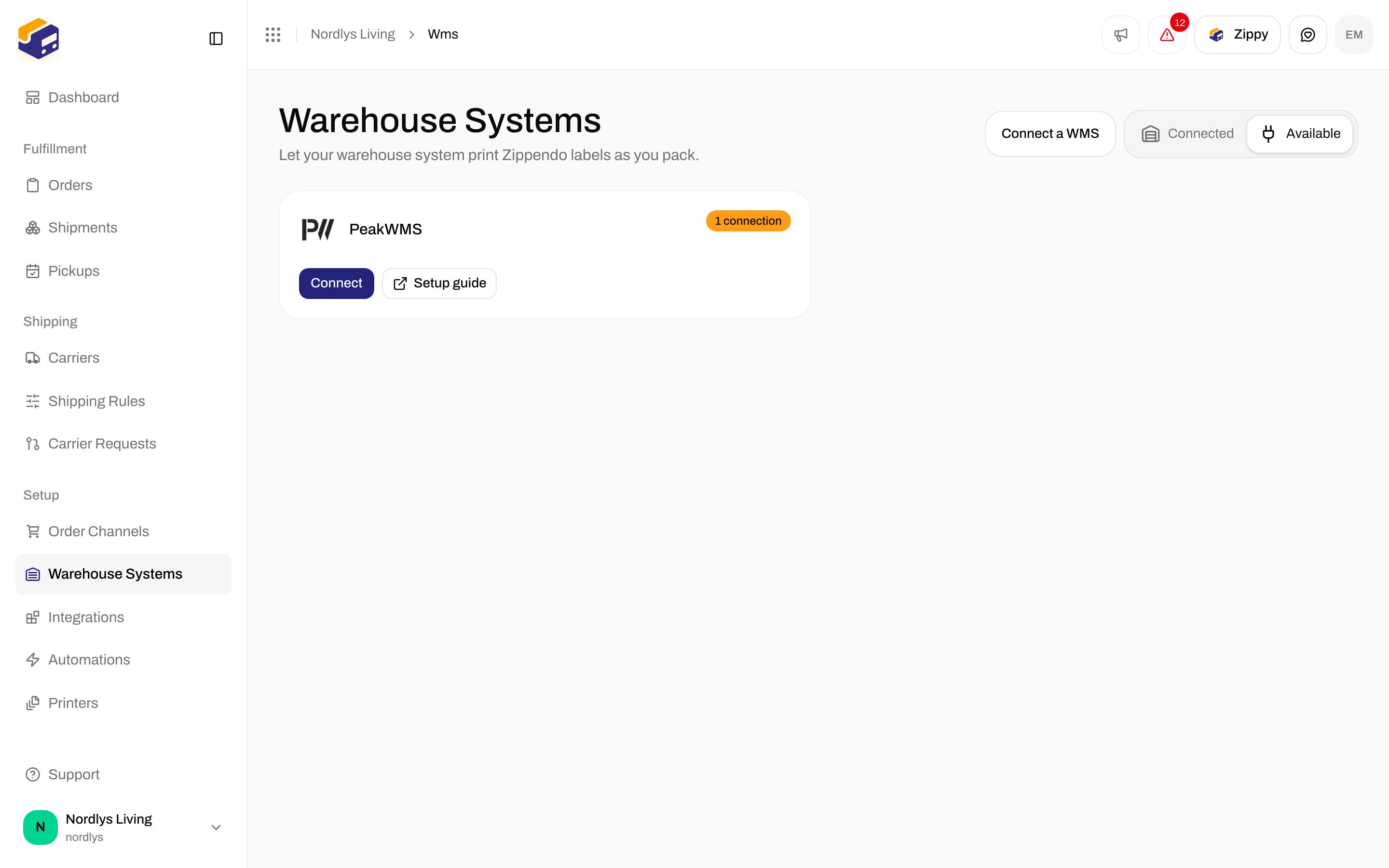
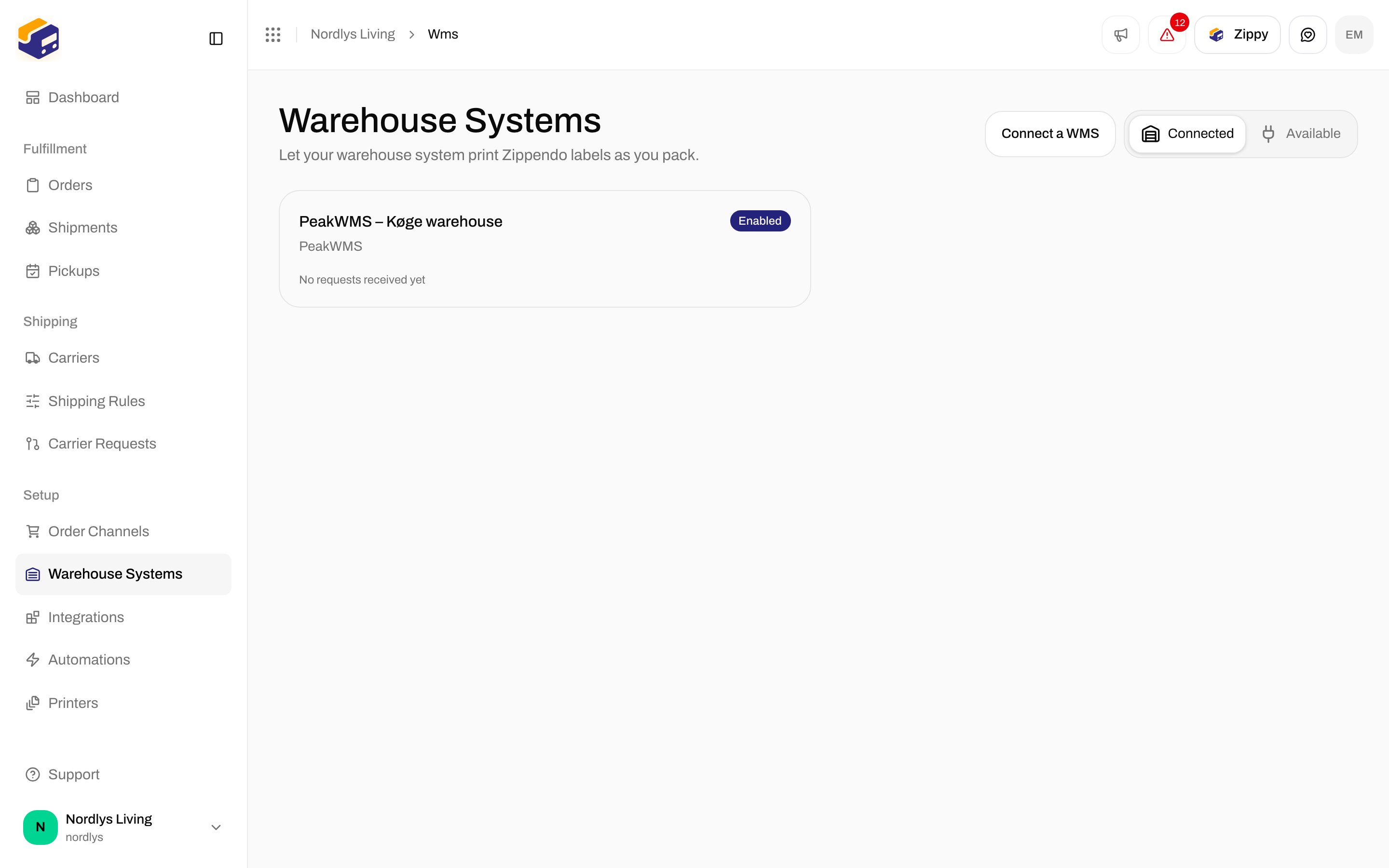
In the sidebar, click Warehouse Systems. The Available tab lists the warehouse systems Zippendo can receive label requests from. PeakWMS is there with a Connect button and a link to the setup guide.
Warehouse Systems, Available tab, with PeakWMS ready to connect
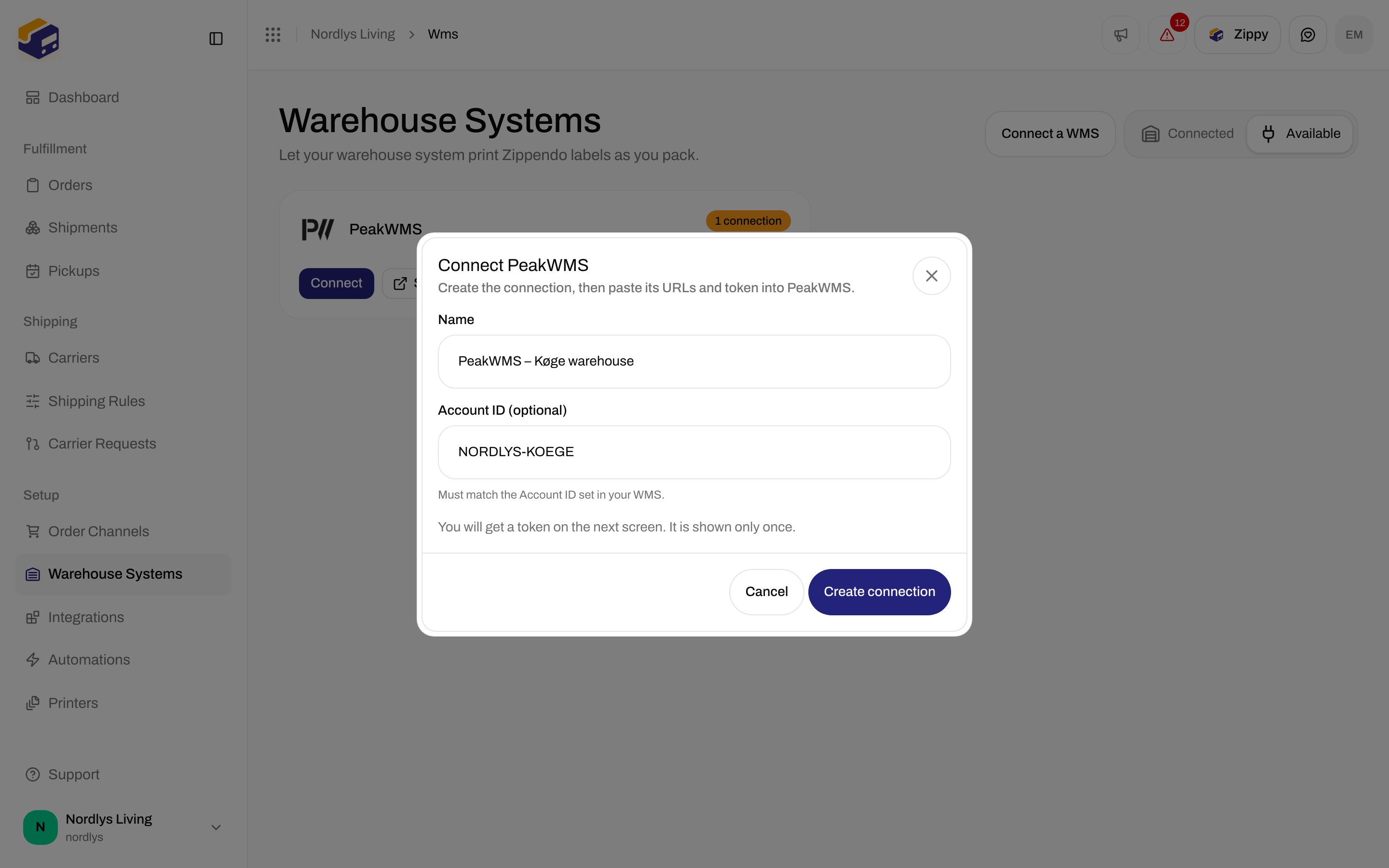
A small dialog asks for a Name and an optional Account ID.
2
Name the connection after the warehouse
Something like “PeakWMS – Køge warehouse”. If you run several warehouses, make one connection per warehouse and name each after its site, so the request log later tells you which one had a problem.
3
Account ID (optional)
If you plan to type an Account ID into PeakWMS, type the same value here. It is a safety net: when the two do not match, Zippendo refuses the request instead of printing a label with the wrong return address on it. You can leave it empty.
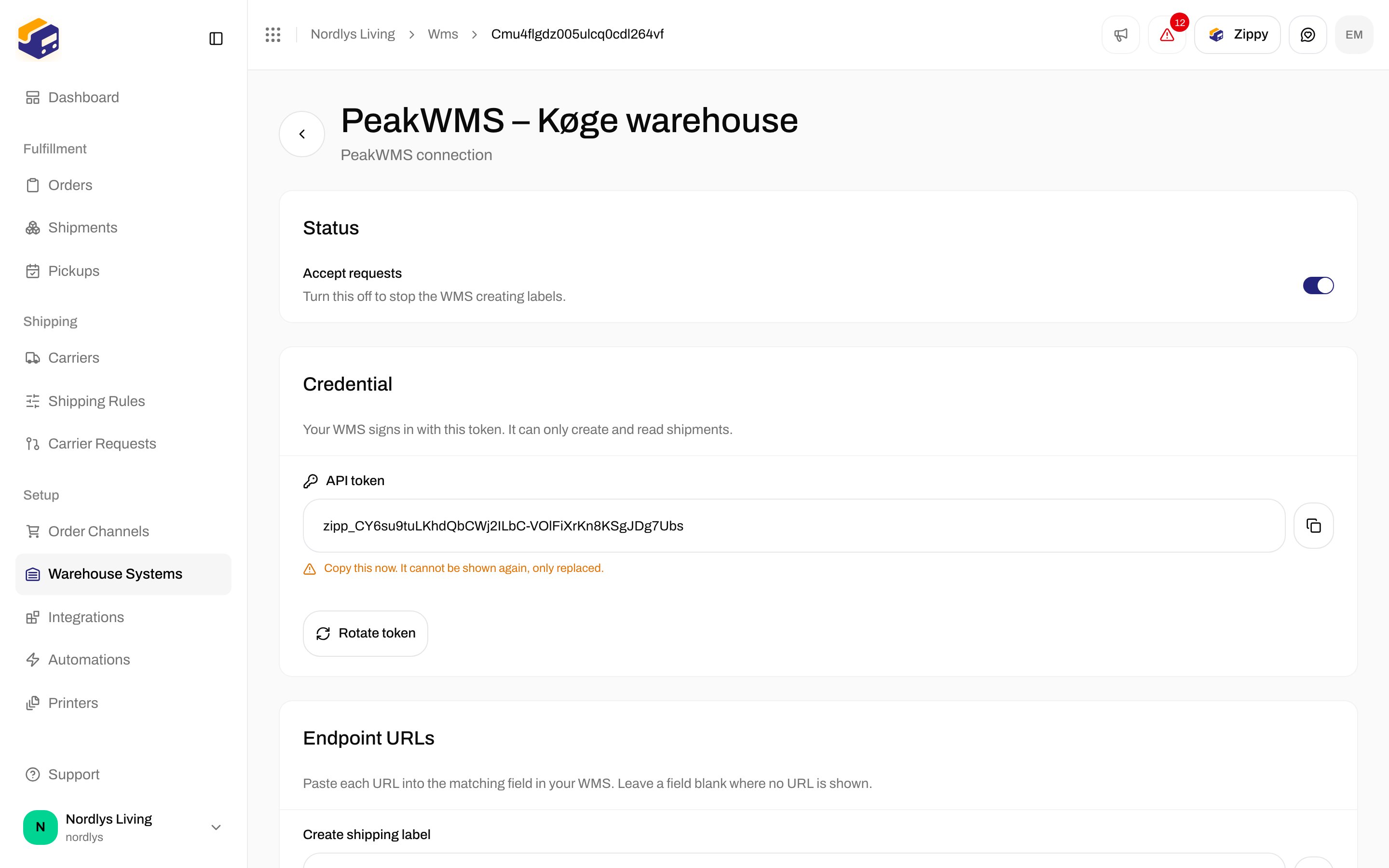
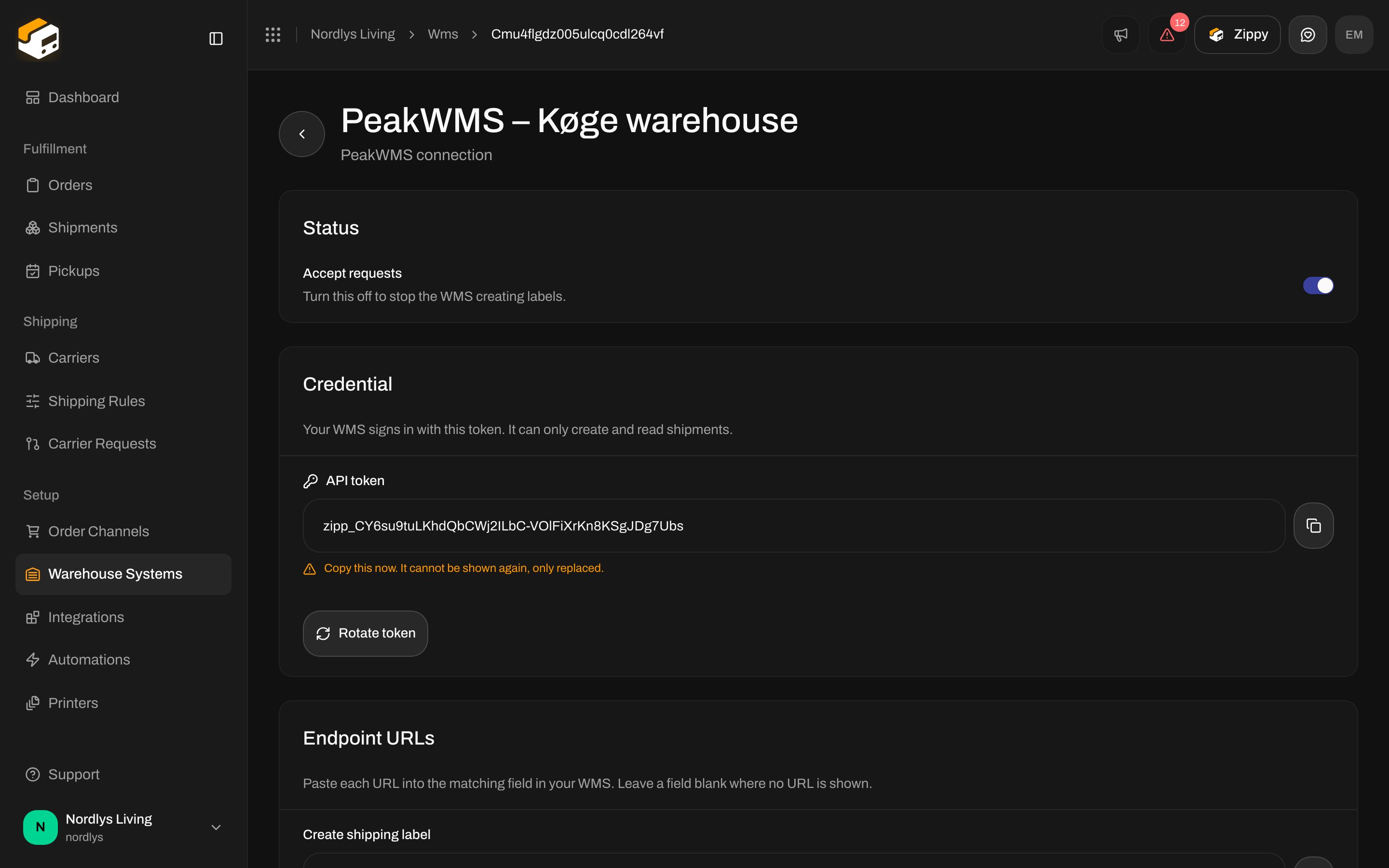
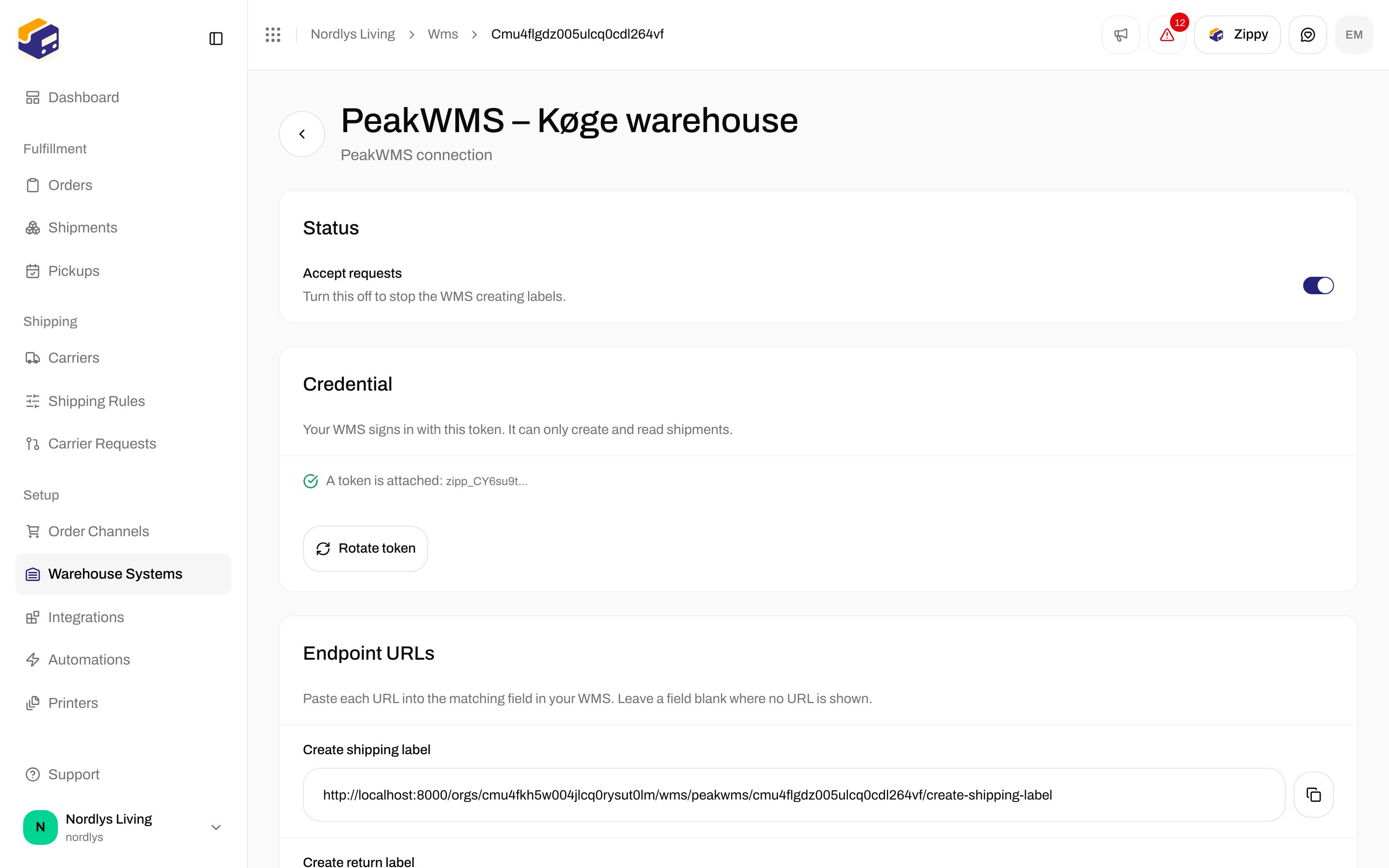
The connection page shows the API token exactly once, right after you create the connection. Click Copy token now and paste it somewhere safe until you have put it into PeakWMS.
The token is shown once, with a Copy token button
If you close the page without copying, the token cannot be shown again. Click Rotate token to get a new one. The old one stops working the moment you do, so PeakWMS needs the new token before packers can print again.
The token only lets PeakWMS create and read shipments. It cannot see your carrier accounts, addresses, orders or billing.
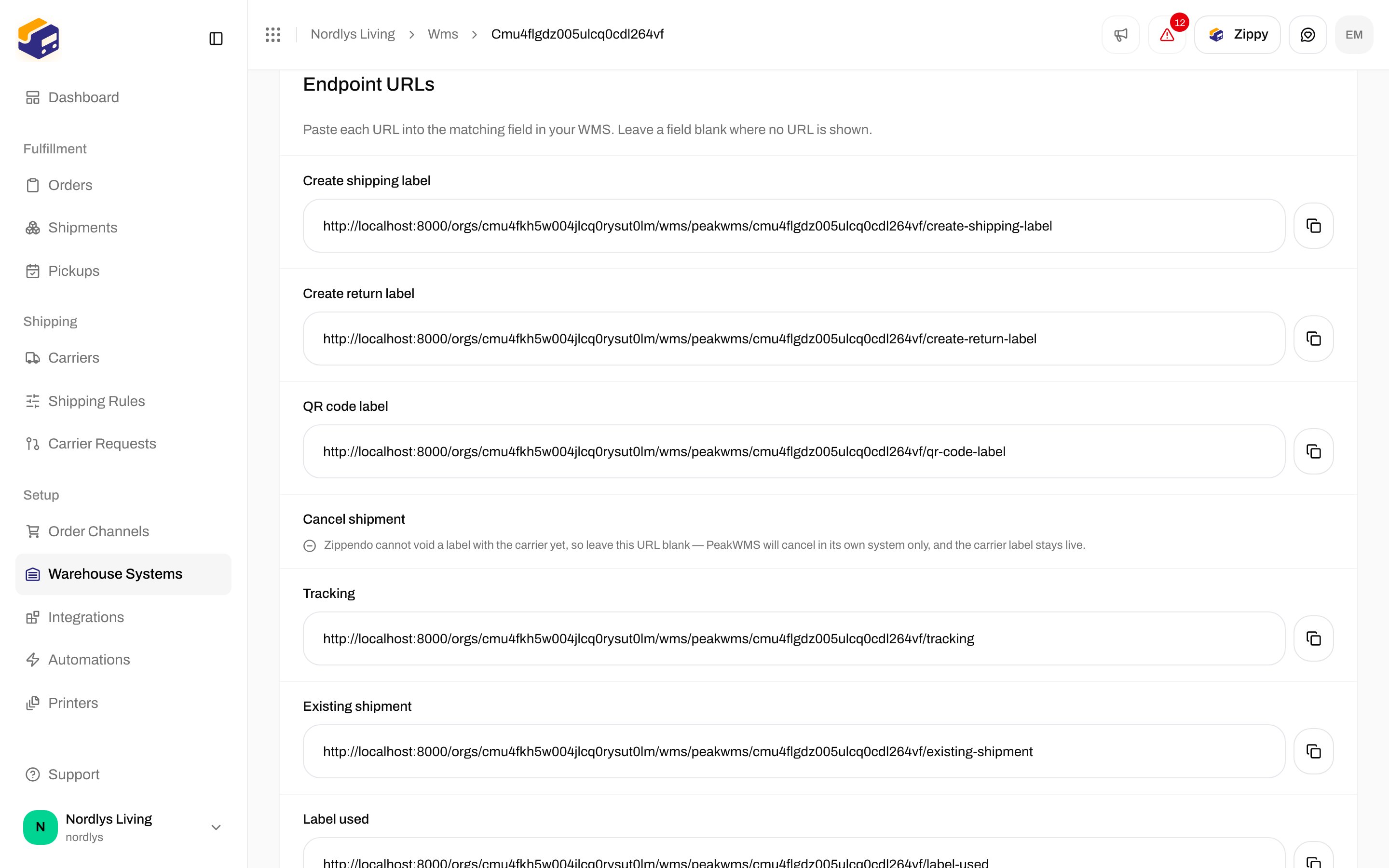
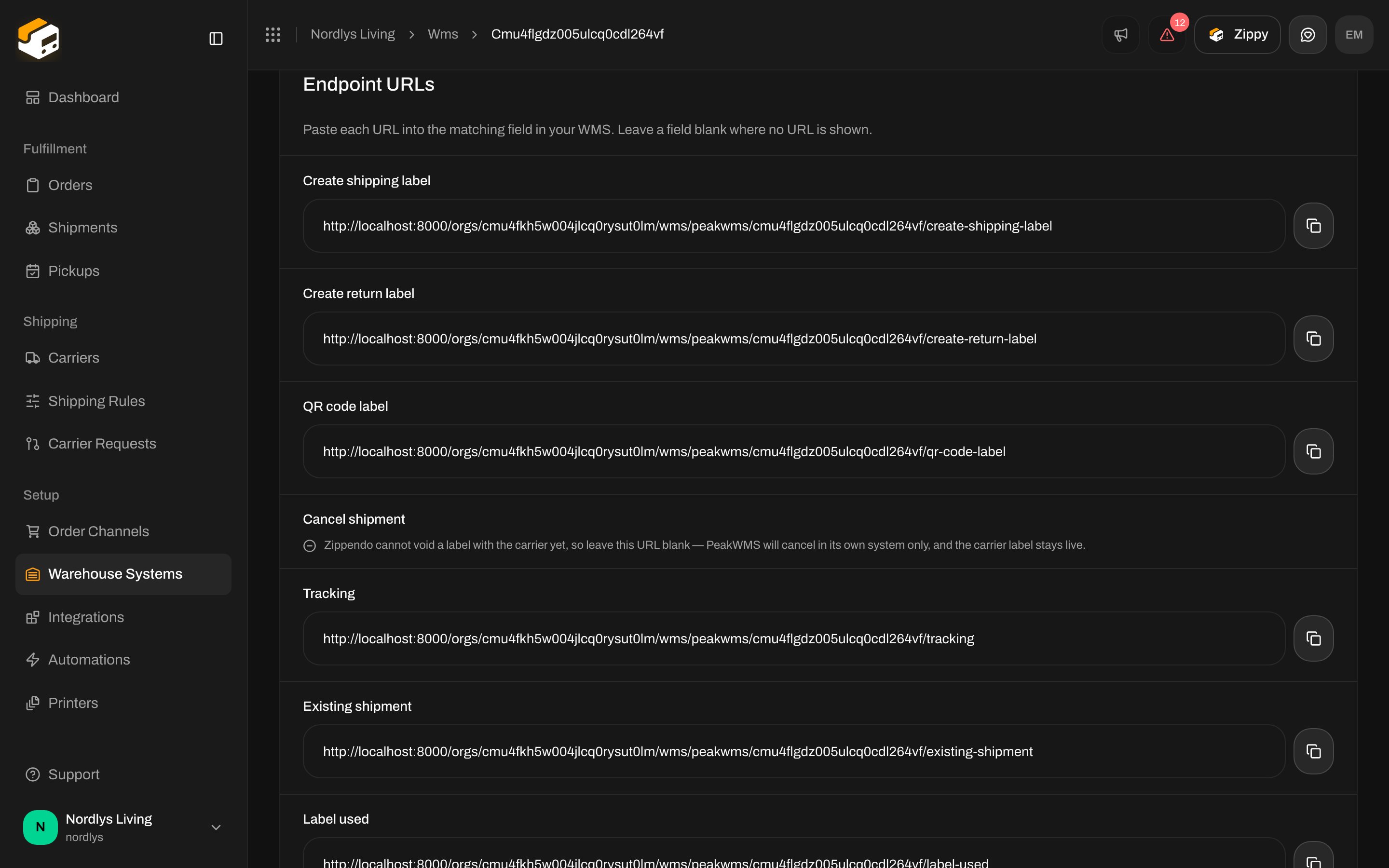
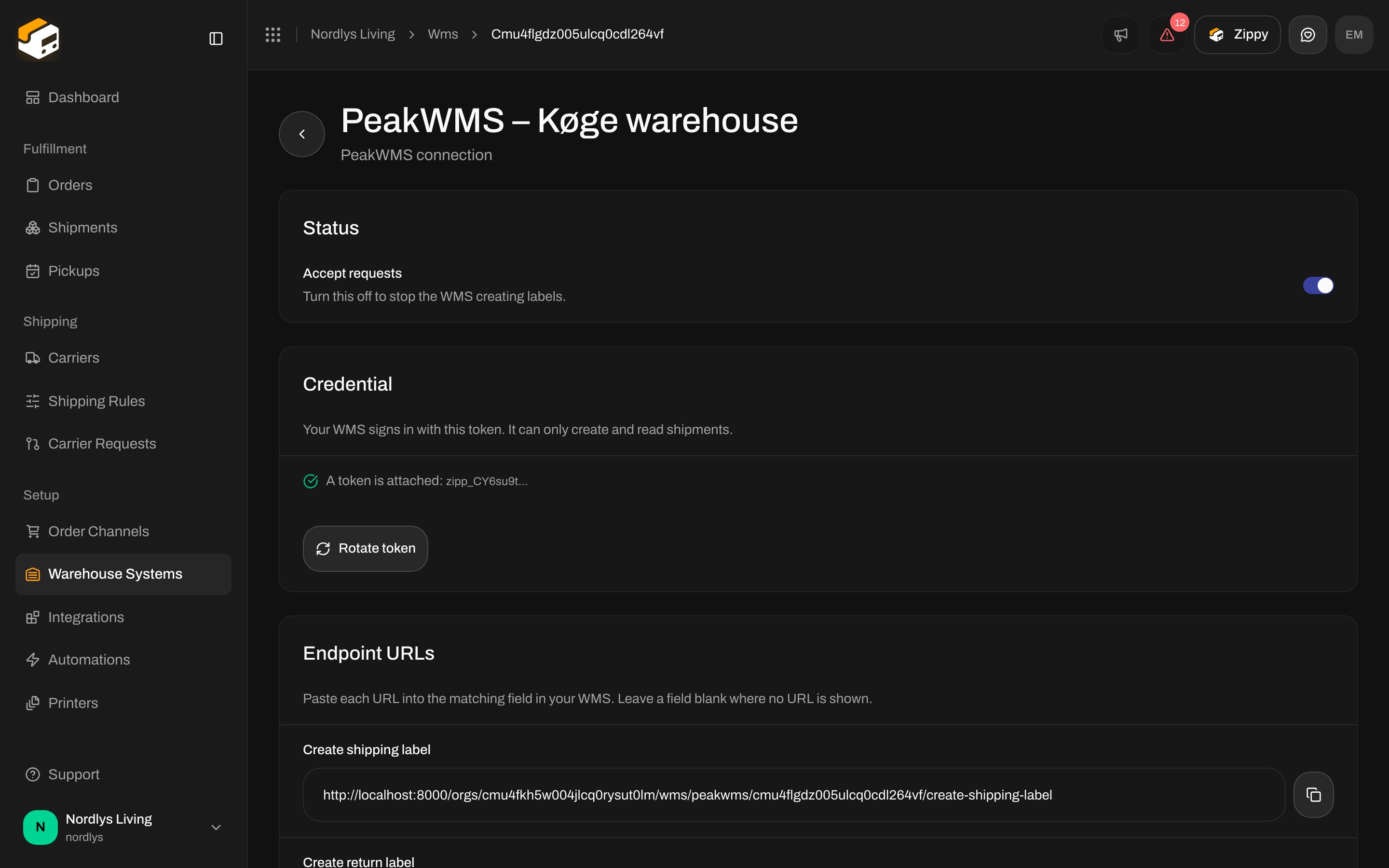
Below the credential, Endpoint URLs lists one web address per thing PeakWMS can ask Zippendo to do. Each has its own Copy URL button.
Endpoint URLs with a copy button next to each address
Now switch to PeakWMS. Everything in this step happens there, on a new forwarder:
1
Create a forwarder
In PeakWMS, add a new Forwarder and set Provider to Generic. If you cannot find the screen, PeakWMS’s own help centre walks through it; the setup is the same whichever shipping company you use.
2
Paste the web addresses
Copy each address from Zippendo into the PeakWMS field with the same name: Create shipping label (required), Tracking (recommended), and the optional ones you want, such as Create return label, QR code label, Existing shipment and Label used. Leave Cancel shipment empty; Zippendo shows no address for it on purpose, because it cannot cancel a label with the carrier.
3
Fill in the login fields
API key is the token you copied in step 3. Auth scheme is Bearer. Account ID is the value you typed in Zippendo in step 2, if you used one.
The full field-by-field table for the forwarder, including which fields are optional, is on the PeakWMS page.
5. Set the Host ID on each shipping method in PeakWMS
In PeakWMS, every shipping method carries a Host ID. That is how PeakWMS tells Zippendo which carrier and service to use when a parcel is packed. You set it in PeakWMS, on the shipping method itself, not in Zippendo.
1
Find the code Zippendo already puts on your orders
When your webshop is connected to Zippendo, every order carries the shipping method the customer picked as a code that looks like postnord:PNL13:rule_01HZX9K2QF. Place a test order in your webshop, open it, and copy that code from the shipping method.
2
Paste it as the Host ID in PeakWMS
Open the matching shipping method in PeakWMS and paste the code into its Host ID field. Repeat for each shipping method your webshop offers. Zippendo recognises these codes on its own; there is nothing to configure in Zippendo for them.
3
Pickup points: paste only the part before the bar
When the customer chose a pickup point, the code on the order ends with a bar and the pickup point, like postnord:PNL13:rule_01HZX9K2QF|1234567. Paste only the part before the bar as the Host ID. PeakWMS splits the code there itself and passes the pickup point on to Zippendo, so one Host ID covers every pickup point.
If a Host ID never matches, or the wrong carrier keeps being used, check whether your orders carry a field called peak_shipping_code, often left behind by a shipping app you used before. PeakWMS reads that field first and ignores the code Zippendo puts on the order. Whoever looks after your webshop can empty it.
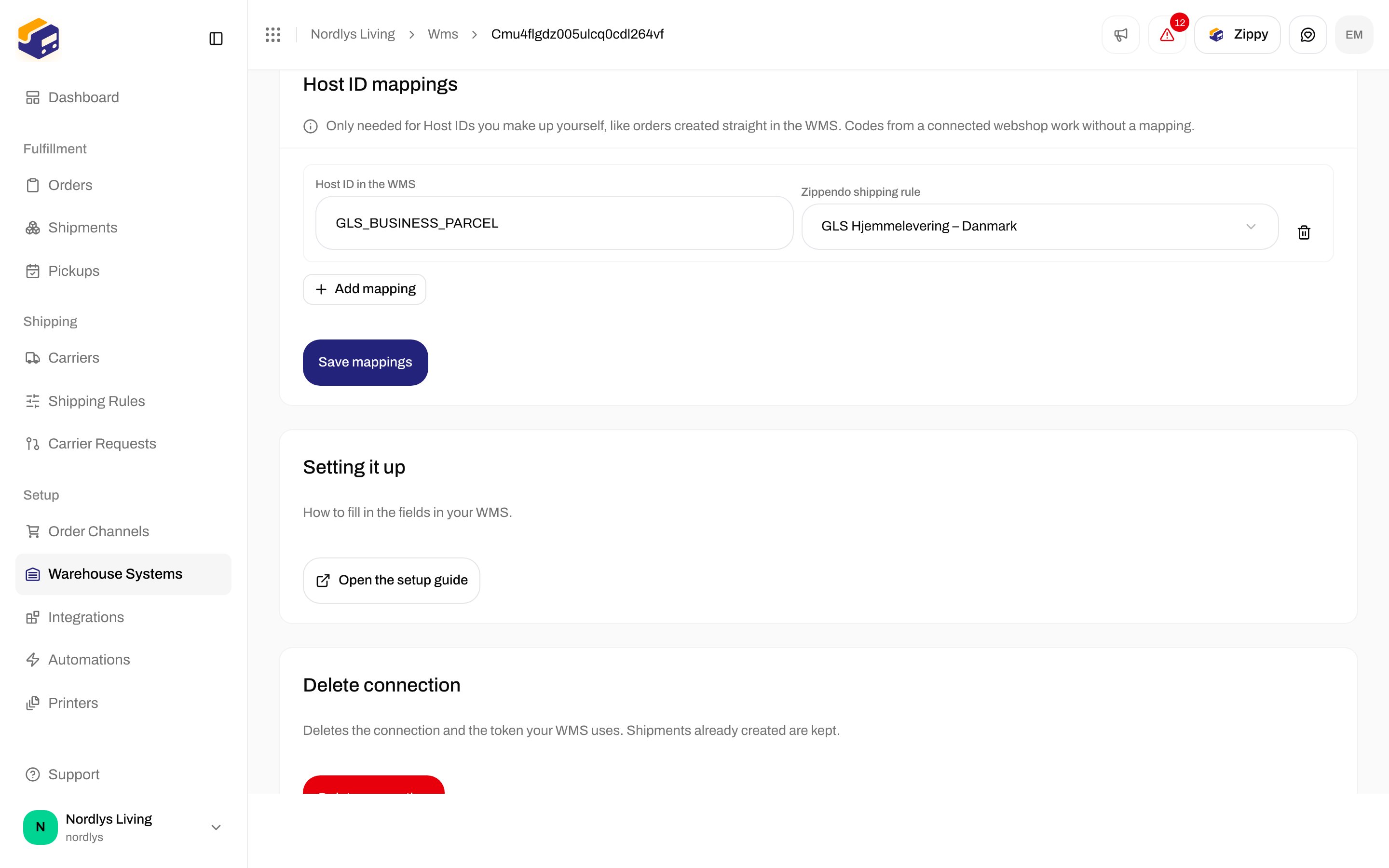
You only need anything in Zippendo when the Host ID is a code of your own making rather than the one from a webshop order. That is the case when orders are typed straight into PeakWMS, or when you prefer codes like GLS_BUSINESS_PARCEL. Then, in Zippendo, open the connection and add a Host ID mapping: your code on the left, the Zippendo shipping rule it should use on the right. Click Save mappings when the rows are complete; a row without a shipping rule cannot be saved.
A Host ID mapping: GLS_BUSINESS_PARCEL points at the GLS home delivery rule
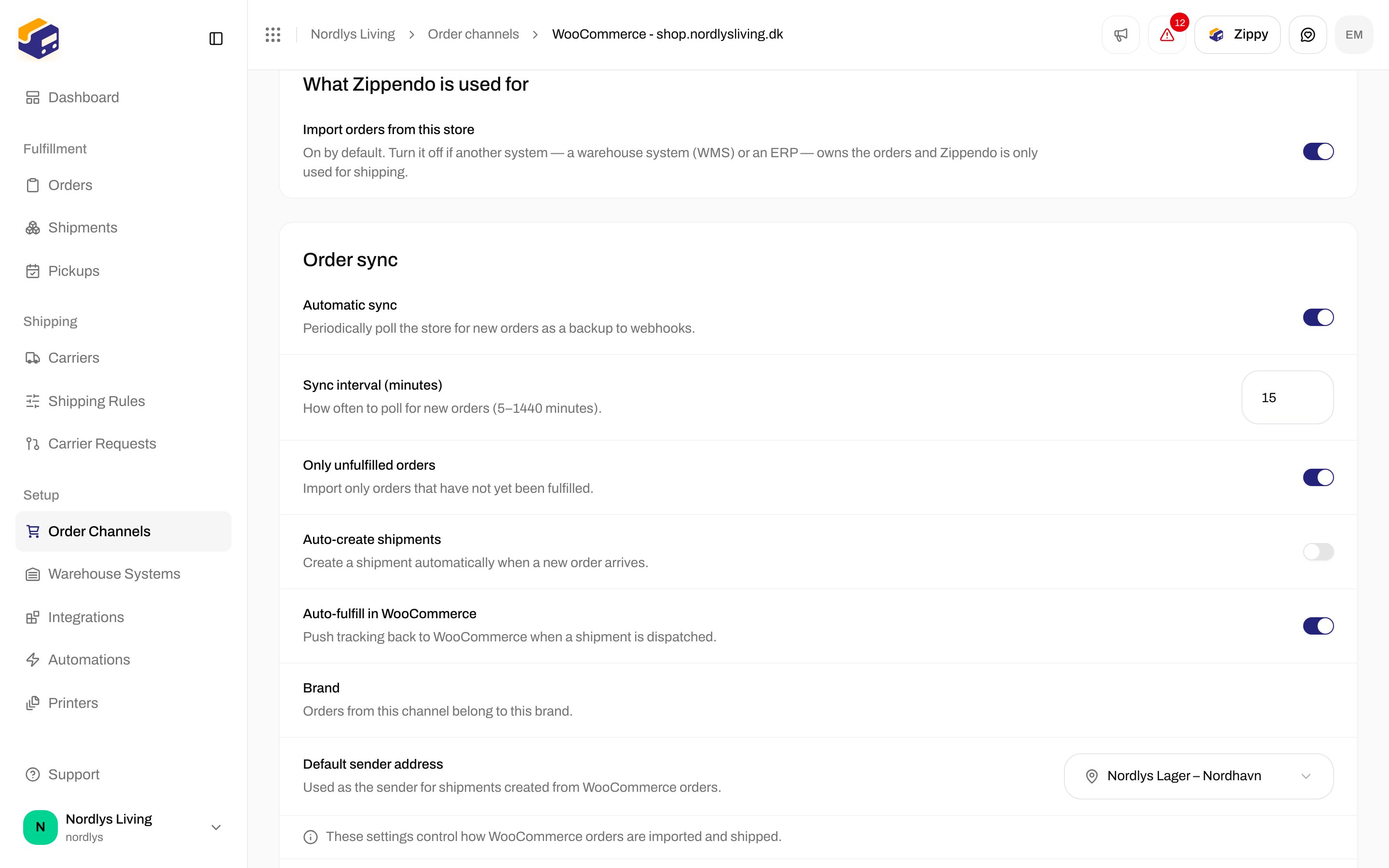
PeakWMS now owns the orders. If Zippendo kept importing them too, both systems would create shipments for the same order, and you would pay for two labels. Open Order channels, open the store, and under What Zippendo is used for turn off Import orders from this store.
Turn off order import on the store PeakWMS handles
Shipping prices and pickup-point selection at checkout keep working exactly as before. Only the order import stops, and Zippendo no longer marks orders as shipped in your webshop, since PeakWMS does that now.
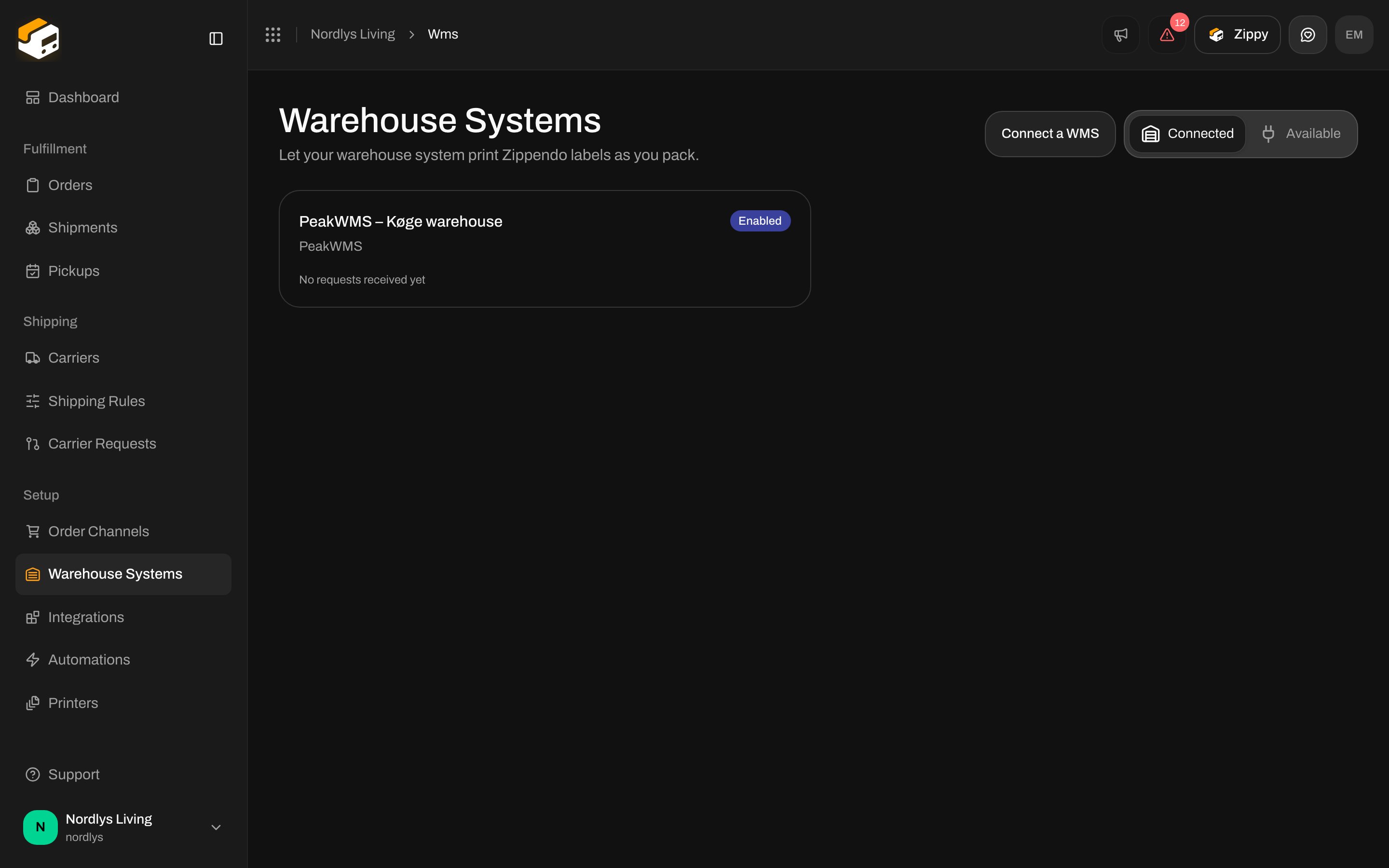
Pack one order in your PeakWMS test environment and look at three things: the label prints and shows the carrier you expected, the parcel appears under Shipments in Zippendo, and tracking shows up on the order in PeakWMS. Then swap the addresses in PeakWMS to your live setup.Back on Warehouse Systems, the Connected tab shows every connection with when PeakWMS last asked for something, or the most recent failure in plain words.
Open the connection and turn off Accept requests to stop PeakWMS creating labels without deleting anything. Turn it back on when you are ready. Delete connection at the bottom removes the connection and its token for good. Shipments that were already created stay where they are.
Accept requests is the switch for pausing a connection
A packer who packs the same order twice does not get two labels. Zippendo hands back the label it already made.
Return labels work the same way. Zippendo always prints your warehouse address from the shipping rule, so the label is right even if PeakWMS has a different address on file.
Dangerous goods are refused rather than shipped without the required paperwork. Send those through a different setup in PeakWMS.