

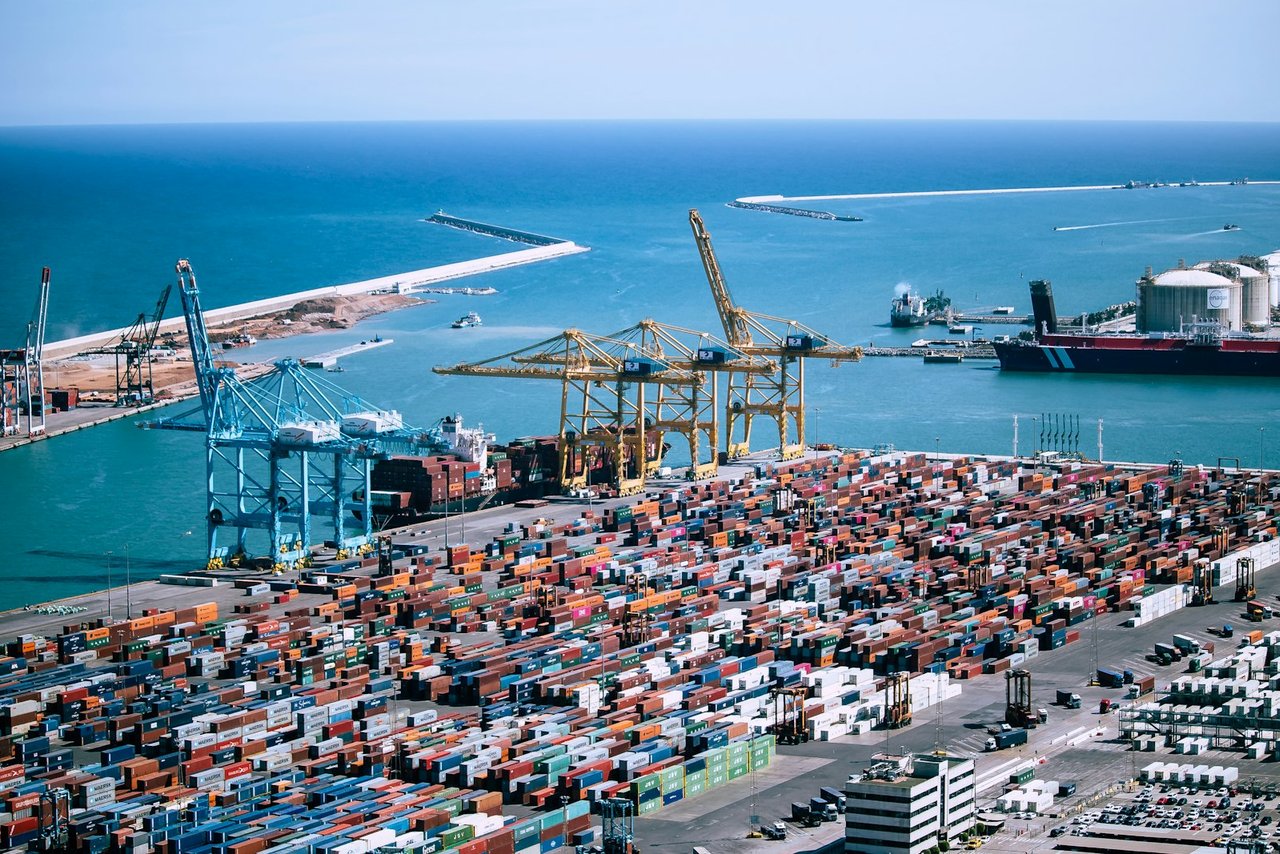
Photo by Olga Subach on Unsplash
Since 1 November 2026, EU product identifiers are mandatory for goods sold online to EU consumers and shipped from outside the EU in parcels worth up to 150 euros: your product number, the manufacturer's number and, where one exists, a standard code such as the EAN, for every product. The European Commission confirmed the enforcement date on 3 November 2026, after a voluntary start on 1 July 2026. It affects webshops in Norway, the UK, Switzerland, the US and elsewhere outside the EU that ship to EU customers, and EU webshops that ship from a warehouse outside the EU.
A second change is agreed but not law yet. On 9 November 2026, EU finance ministers in the Council agreed their position (a general approach) on letting the Import One-Stop Shop (IOSS) cover online sales of any value from 1 July 2028. The Council can only adopt it after the European Parliament has been consulted again.
Key takeaways
Each product in a low-value parcel sold to an EU consumer from outside the EU now needs your product number and the manufacturer's number on the import declaration, plus the EAN or another standard code where one exists.
Whoever declares the goods files the identifiers: you as an IOSS holder, or the carrier or broker acting for you. They can only file what you send them.
The Commission's guidance expects each identifier to point to one product variant and stay the same over time.
IOSS may cover parcels of any value from 1 July 2028. EU countries agreed this in the Council, but it is not adopted yet.
What changed for EU imports on 1 November 2026?
The rule sits in Annex B of the Union Customs Code Delegated Regulation (EU) 2015/2446, as amended by Delegated Regulation (EU) 2026/1022. Article 1, points (58) to (60), defines the three identifiers. The Commission's announcement says customs wants them to find non-compliant and dangerous products more effectively.
The Commission's guidance for Member States and trade says the requirement covers distance sales of imported goods in consignments worth up to 150 euros, and that the Commission is amending Annex B to say so explicitly. Sales to businesses are in principle not covered.
Our post on the EU handling fee on imported parcels explains which sales count as distance sales, the 3-euro duty and the fee, and names the identifiers in short. What is new here: what each identifier is, who files it, and the IOSS change.
| Change | Status | Applies from |
|---|---|---|
| Product identifiers on low-value imports | In force | Voluntary from 1 July 2026, enforced from 1 November 2026 |
| IOSS for sales of any value | Council general approach, not yet adopted | 1 July 2028, if the EU Customs Data Hub is ready |
| Fuller product data on e-commerce imports | Planned | With the EU Customs Data Hub, from July 2028 |
Which product identifiers does each order line need?
The import declaration needs up to three identifiers for each product. If several products share one line of the declaration because they have the same tariff classification, each product gets its own set. A bundle, such as a laptop sold with a sleeve and a mouse, lists each product.
| Identifier | What it is | Who assigns it | Required | Code on the declaration |
|---|---|---|---|---|
| Merchant product identifier (M-PID) | The product number on the site where the product is sold, such as your SKU | The online seller, marketplace or platform | Always | C127 |
| Manufacturer's own identifier (NS-PID) | The manufacturer's model, part or style number | The manufacturer, producer or product supplier | Always | C128 |
| Standard identifier (S-PID) | An international code, usually an EAN, UPC or ISBN | The manufacturer, producer or product supplier | Only where one exists | C129, or Y081 when none exists |
Rules from the Commission's guidance that matter for a webshop:
- One identifier per variant. Each identifier points to exactly one variant, such as one size and colour, and stays the same over time. Numbering by batch or single unit when a model number exists counts as an infringement.
- Marketplace sales. When you sell through a marketplace, its product number is the merchant identifier.
- Your own brand. If no manufacturer number exists, the manufacturer is expected to assign one. It may also use the EAN as its own number.
- Used and personalised goods. Second-hand goods carry the original product's identifiers. A personalised T-shirt carries those of the plain T-shirt.
Who files the identifiers, and what must you send?
The declarant files them. For parcels worth up to 150 euros, the guidance says this is in most cases the IOSS holder, the user of the special arrangements, or their indirect customs representative, in practice often the carrier or a customs broker lodging the declaration for you. Under the Union Customs Code, whoever lodges a declaration answers for its accuracy, so the declarant must make sure the identifiers reach it.
Your job is to get them there. As the seller, you assign the merchant identifier. The manufacturer or supplier assigns the other two and is expected to pass them down the supply chain to you. So for every product line, you send the declarant your product number, the manufacturer's number and the EAN, or a note that the product has none.
The rest of the customs data still matters: description, quantity, value, currency, country of origin and HS code. Our guides to HS codes for webshops and the CN23 customs form cover those fields.
What did EU countries agree about IOSS on 9 November 2026?
Today, IOSS only covers consignments worth up to 150 euros. With IOSS, the VAT is included in the checkout price. Above that value, VAT is charged at import, and the customer typically pays it on delivery.
The Council's general approach on a draft directive amending the VAT Directive, which the Commission welcomed, would change this:
- No value limit. A seller could declare and pay the VAT on online sales of imported goods through one IOSS registration, whatever the value.
- Marketplaces. A marketplace that facilitates these sales would be treated as the seller for VAT at any value. Today that rule also stops at 150 euros.
- Customs warehouses. IOSS would also cover goods sold from the new customs warehouses for distance sales.
- Excise goods would stay outside IOSS.
Under the agreed text, Member States would apply the rules from 1 July 2028, or later if the IOSS part of the EU Customs Data Hub is not running by 1 June 2028. The Commission would review the scheme by 1 December 2030. The text can still change before formal adoption.
For a webshop in Norway, the UK or Switzerland, this means an order worth more than 150 euros to a customer in Sweden or Germany could be sold with the VAT included at checkout from mid-2028, instead of the customer paying on delivery. Nothing changes before then.
What should webshops do now?
- Check which of your EU orders are distance sales of imported goods, using the test in the handling fee post.
- Give every product variant a stable product number, ideally the SKU your customers see on the product page.
- Collect the manufacturer's model number and the EAN for every product you ship into the EU. For your own brand, assign model numbers yourself.
- Mark the products that have no EAN, so the declaration can say so.
- Ask your carrier or customs broker how they want to receive the identifiers and what happens to a parcel without them.
- If you sell orders above 150 euros to EU consumers, note July 2028 and talk to your tax adviser about IOSS once the directive is adopted.
None of this is legal or tax advice. Check how the rules apply to your products with your broker, carrier or tax adviser.
How Zippendo helps
In Zippendo, you enter customs details on each order line of a parcel: SKU, description, unit price, currency, country of origin and tariff number. See customs and documents.
Your IOSS, EORI and VOEC numbers are set once for the organization, or per brand, and Zippendo adds them to every shipment (organization settings).
Carriers such as Bring, PostNord and UPS make the customs papers themselves and send them with the label. On Shopify, the Zippendo app reads product details such as the customs code and country of origin (connect Shopify).
Product identifiers are new for carriers too, so ask your carrier or customs broker how they want to receive your product number, the manufacturer's number and the EAN. Shipping the other way? See our customs checklist for Norway, Switzerland and the UK.
Sign up and connect the carrier that takes your EU parcels, then fill in the customs details on your order lines.
EU product identifiers FAQ
Sincerely yours,

Jonas Bang
Jonas Bang · Co-founder, CPO