

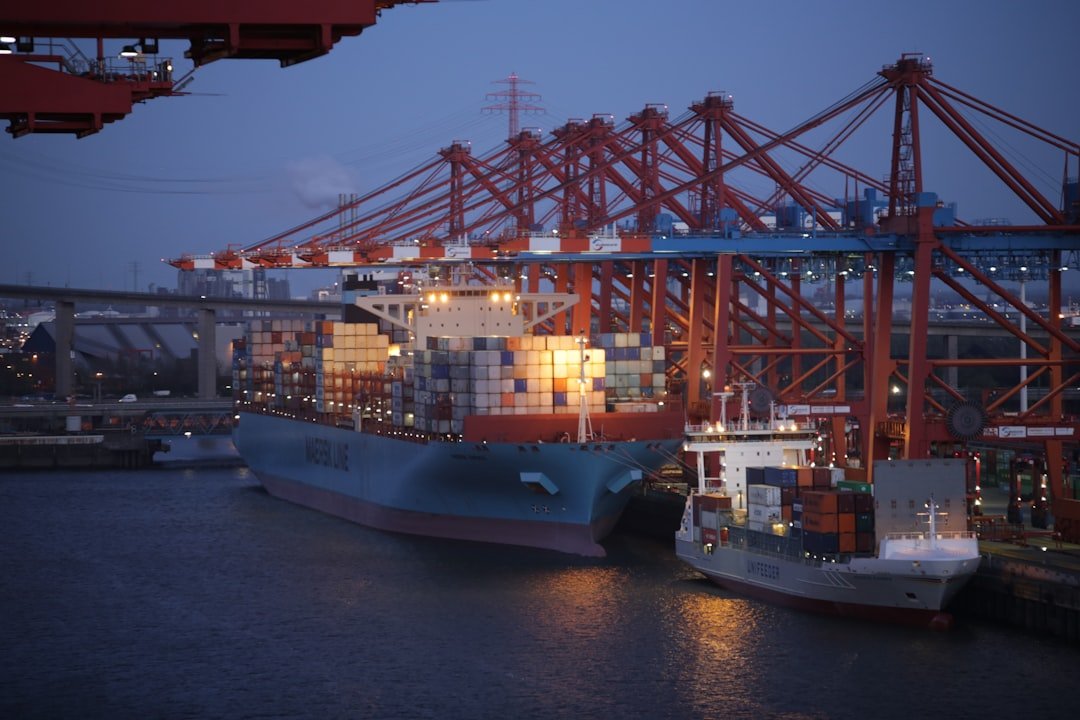
Photo by Bernd 📷 Dittrich on Unsplash
A parcel from the EU to Norway, Switzerland or the United Kingdom crosses a customs border, so it needs customs data on every order line, a customs declaration (CN22 or CN23) and often a commercial invoice. With most parcel and express carriers, the carrier produces the declaration from the data you send and returns it with the label. Import VAT is usually paid by your customer at the border, unless you charge it at checkout. The checklist covers the documents, the data and each country's VAT rules.
Key takeaways
Norway, Switzerland and the UK are outside the EU, so a parcel there crosses a customs border.
With most parcel and express carriers, the carrier produces the CN22 or CN23 and returns it with the label.
Each order line needs a description, quantity, value, country of origin and HS code.
Norway: sellers in the VOEC scheme charge Norwegian VAT at checkout on items valued below NOK 3,000.
Switzerland does not collect import VAT of CHF 5 or less, and most industrial goods pay no customs duty.
Great Britain: on consignments of GBP 135 or less, the seller charges UK VAT at checkout and must register for UK VAT.
Why do parcels to Norway, Switzerland and the UK need customs documents?
Inside the EU, goods move between countries without customs. Norway, Switzerland and the United Kingdom are not part of the EU, so a parcel to a customer there leaves the EU and enters another customs area. Customs in the destination country needs to know what is in the box, what it is worth and where it was made, so it can charge the right VAT and duty.
For a parcel, the carrier usually lodges the import declaration from the details you give it. Swiss customs describes it the same way: the carrier, for example DHL, UPS or Swiss Post, prepares the customs declaration from the sender's details. So the quality of your data decides whether the parcel clears quickly or waits at the border.
Who makes the customs documents, you or the carrier?
There are four documents to know. Who makes each one depends on the carrier and the product.
| Document | What it is | Who usually makes it |
|---|---|---|
| CN22 | A short customs declaration for low-value postal items | The carrier, or you on the postal service's form |
| CN23 | The full customs declaration for parcels | The carrier, from your order line data |
| Commercial invoice | The sales document customs uses to check the value | The carrier, or your shipping software |
| Proforma invoice | An invoice for goods that are not sold, such as a free replacement | Your shipping software |
Bring, DHL Express, DHL Parcel Benelux, FedEx, Matkahuolto, PostNL, PostNord, Posti and UPS make the customs papers themselves and return them with the label. InPost files the customs declaration from the shipment's data and returns no customs document, and GLS in Germany, Austria, Belgium and Ireland receives the customs data with the booking. DHL eCommerce Europe sends a CN23 with DHL Parcel International and prints a CN22 on the DHL Parcel Connect Light label.
When the carrier does not supply an invoice, your shipping software can generate a commercial or proforma invoice from the same order lines. For a one-off shipment where you fill in the forms yourself, use the free CN22 and CN23 generator and the free commercial invoice generator. Both print in your browser, and no account is needed. Our article on CN22 and CN23 customs forms explains each field.
What data does every order line need?
The carrier builds the declaration from your order lines, so a gap in an order line becomes a gap on the CN23. Before you send a parcel outside the EU, check that every line has:
- Description: what the item is and what it is made of, for example "women's cotton t-shirt", not "clothing" or "gift".
- Quantity: the number of units.
- Unit price and currency: the value of one unit, above 0, in one currency for the whole shipment.
- Country of origin: where the goods were made, not where you ship from.
- HS code (tariff number): the classification that decides the duty rate.
The shipment also needs:
- Delivery terms: DAP (your customer pays import charges) or DDP (you pay them). Not every carrier accepts DDP on every route.
- Your EORI number, and the receiver's EORI number for some business deliveries.
- The receiver's phone number and email address, which several carriers require on international parcels.
Store the HS code and country of origin on each product in your webshop, so they reach every order automatically.
How does Norway collect VAT on webshop parcels (VOEC)?
Norway runs the VOEC scheme (VAT on e-commerce) for foreign sellers of low-value goods. If you register, you charge Norwegian VAT at checkout on goods valued below NOK 3,000 per item, report it every quarter, and your customer does not wait for customs clearance.
Three rules matter when you ship:
- The limit is per item, not per parcel. You can combine several items that are each below NOK 3,000. If one item is worth NOK 3,000 or more, the items cannot travel as VOEC goods together, and the shipment goes through normal customs.
- Give your VOEC number digitally. The Norwegian Tax Administration says you must always provide your 7-digit VOEC number digitally to the carrier, which passes it on to Norwegian Customs. Without it, the parcel can be delayed, the carrier can charge a fee, and VAT can be charged a second time at the border.
- Some goods are excluded. Food and beverages, including dietary supplements that are not medicines, goods subject to excise duty and goods with import restrictions cannot be sent as VOEC goods.
If you are not registered, or an item is worth NOK 3,000 or more, VAT and any customs duty are paid when the goods enter Norway, and the carrier can charge your customer an extra fee for customs clearance. If you ship from Norway in the other direction, read our guide to shipping from a Norwegian webshop.
How does Switzerland charge VAT and duty on imported parcels?
Switzerland charges import VAT at 8.1%, or 2.6% for goods such as food, books and medicines. Swiss customs does not collect a VAT amount of CHF 5 or less. According to the Federal Office for Customs and Border Security, that matches an assessment basis of CHF 62 at 8.1%, or CHF 193 at 2.6%. Customs duties below CHF 5 are not collected either.
Duty matters less than it used to. Switzerland abolished its industrial tariffs on 1 January 2024, so industrial goods in HS chapters 25 to 97 pay no import duty. Agricultural goods still pay duty, calculated by weight, and VAT still applies.
Two more points:
- Clearance fees: Swiss Post and courier firms charge their own fees for customs clearance. They vary by company, so tell your Swiss customers that a fee may apply on DAP shipments.
- Mail-order registration: a foreign seller with at least CHF 100,000 a year in small consignments to Switzerland must register for Swiss VAT and appoint a tax representative in Switzerland. From the following month, all its deliveries to Switzerland are taxed as domestic sales, and it imports the goods in its own name.
How does the UK charge VAT on parcels from the EU?
The UK splits parcels to Great Britain (England, Scotland and Wales) at a consignment value of GBP 135. The value counts for the whole consignment, not per item, which is the reverse of Norway's per-item limit. Northern Ireland has different rules.
- GBP 135 or less: you, the seller, charge UK VAT at the point of sale. Sellers outside the UK must register for UK VAT to do this.
- More than GBP 135: normal import VAT and customs rules apply when the goods enter the UK.
- Exceptions: the point-of-sale rule does not cover consignments with excise goods, or gifts that are not sold.
- Business customers: if a UK VAT-registered business gives you its VAT number, you do not charge VAT, and the customer accounts for it under the reverse charge.
A change to import duty is planned. The UK government plans to remove the relief from import duty for goods valued at GBP 135 or less, at the latest by October 2028. Watch GOV.UK for the date, because import duty can then apply to low-value parcels too.
Customs checklist before you ship
- Add an HS code, a country of origin and a clear description to every product in your webshop.
- Decide per country whether you ship DAP or DDP, and say so at checkout.
- Check whether you need to register for VOEC in Norway, Swiss VAT or UK VAT, based on your volume and order values.
- Add your EORI number and any VOEC number to your shipping setup, and confirm with each carrier how it receives your VOEC number.
- Choose a carrier product that can carry a customs declaration on that route.
- Send the shipment and print the customs documents with the label.
- Attach the documents the way your carrier asks, for example in a document pouch on the box.
- Plan returns: a return crosses the same border in the other direction, so ask your carrier how returns from that country are declared.
How Zippendo helps
In Zippendo, you enter the customs data once and every booking carries it:
- Fill in description, unit price, currency, country of origin and HS code on each order line. Delivery terms default to DAP.
- Add your VOEC, EORI and IOSS numbers once for your organization, or per brand. Zippendo sends your VOEC number with parcels to Norway on carriers that accept it, such as Bring, PostNL, GLS Germany, UPS and DHL Express. With other carriers, confirm how they receive it before your first VOEC parcel.
- Send the shipment. With Bring, DHL Express, PostNord, UPS, FedEx and the other carriers that make their own customs papers, the customs documentation the destination requires is produced as part of the booking and returned alongside the label.
- Let a shipping rule generate a commercial invoice, a proforma invoice and a packing slip, and print them automatically next to the label.
With DHL eCommerce Europe, Zippendo makes the commercial invoice for DHL Parcel Connect to the UK. The customs and documents guide shows every field. Create a Zippendo account, add your EORI and VOEC numbers, and book your first parcel to Norway, Switzerland or the UK.
Customs for Norway, Switzerland and the UK FAQ
Sources
- Norwegian Tax Administration: E-commerce (VOEC), accessed 16 November 2026
- Norwegian Tax Administration: Sending goods under the VOEC scheme, accessed 16 November 2026
- Norwegian Tax Administration: Shopping from foreign online stores, accessed 16 November 2026
- Swiss Federal Office for Customs and Border Security: Receipt of letters and parcels, accessed 16 November 2026
- Swiss Federal Tax Administration: Mail-order trade and platform taxation, accessed 16 November 2026
- SECO: Abolition of industrial tariffs, accessed 16 November 2026
- GOV.UK: VAT and overseas goods sold directly to customers in the UK, accessed 16 November 2026
- GOV.UK: Reforming the customs treatment of low value imports into the UK, updated 28 October 2026
Sincerely yours,

Jonas Bang
Jonas Bang · Co-founder, CPO