

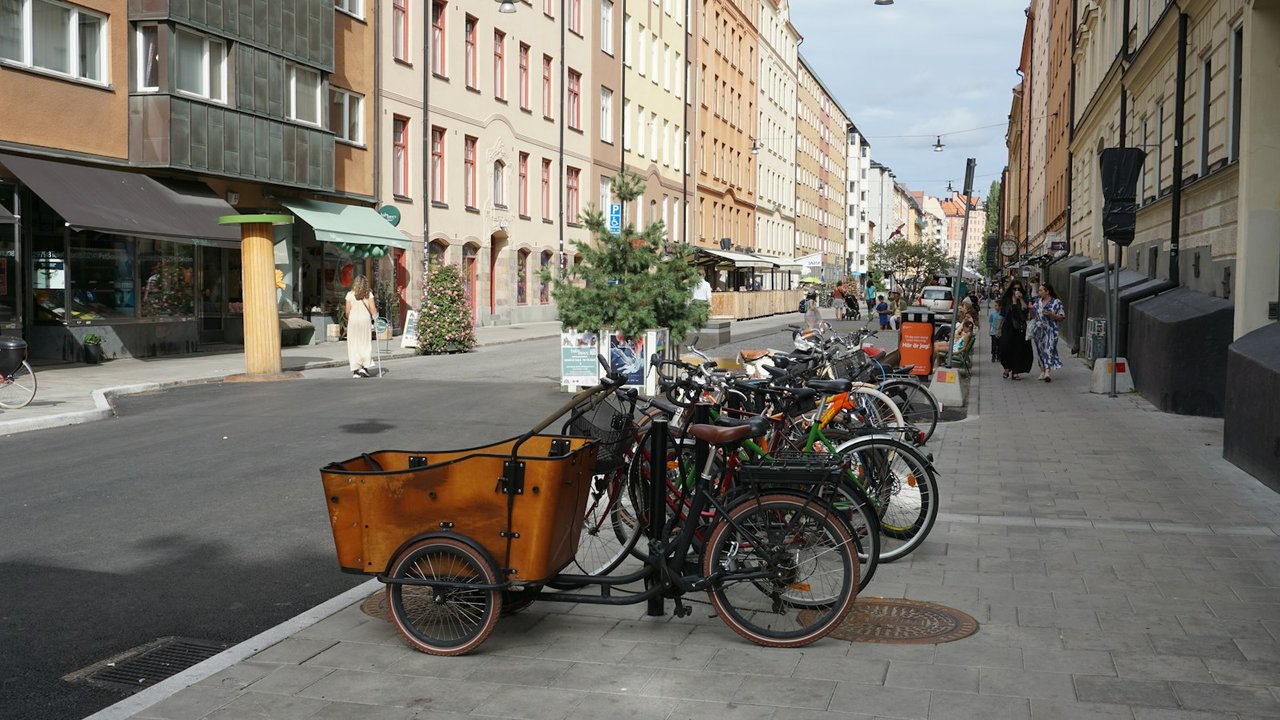
Photo by Marek Lumi on Unsplash
Since 27 September 2026, a webshop selling to EU consumers can no longer offer "climate-neutral delivery" or "CO2-neutral shipping" when the claim rests on offsetting emissions somewhere else. The ban comes from Directive (EU) 2024/825, the Empowering Consumers for the Green Transition directive, which put offset-based neutrality claims, vague green claims with no explanation or recognised ecolabel behind them, and homemade sustainability badges on the EU list of practices banned in all circumstances.
The directive was adopted on 28 February 2024, EU countries had until 27 March 2026 to write it into their own law, and it has applied since 27 September 2026, according to the European Commission. The Commission's Q&A of 22 September 2026 says that the offsetting ban covers services as well as goods, with no transition period for claims already in use. This article is a practical guide, not legal advice.
Key takeaways
Calling a product or a delivery "climate neutral", "CO2 neutral" or "climate compensated" because of offsetting is banned in the EU.
Vague words such as "green delivery" need a specific explanation right next to them, or a recognised ecolabel behind them.
Sustainability badges must come from a certification scheme or a public body, so homemade badges have to go.
Specific, true facts stay allowed, such as "delivered by bicycle courier in central Copenhagen", if that is what really happens.
Shops selling goods must also show the EU harmonised notice on the legal guarantee.
What changed for green claims on 27 September 2026?
The directive amends two EU laws: the Unfair Commercial Practices Directive and the Consumer Rights Directive. For marketing, the big change is new entries on the "blacklist", the practices that are unfair in every case. An authority doesn't have to show that a claim changed what customers decided; making it is enough.
Countries carry the rules in their own law, for example Ireland with S.I. No. 124/2026, Germany in the annex of its Act against Unfair Competition (UWG), Denmark in its Marketing Practices Act.
| Now banned | What it can look like in a webshop |
|---|---|
| Claiming, based on offsetting, that a product has a neutral, reduced or positive greenhouse gas impact | "Climate-neutral delivery", "CO2-neutral shipping", "climate-compensated parcels" |
| A generic environmental claim without recognised excellent environmental performance | "Green delivery", "eco-friendly shipping", "sustainable packaging" with no explanation |
| A claim about the whole product or business when it only concerns one part | "Eco-friendly sneakers" because the box is recycled |
| A sustainability label not based on a certification scheme or set up by a public body | A homemade "Green Shipper" badge next to a shipping option |
Can a webshop still call its delivery climate-neutral?
Not when the claim rests on offsetting. The Commission's Q&A says the ban covers claims that "a good or service" is carbon neutral, and the directive's own examples include "climate neutral", "CO2 neutral certified" and "climate compensated". A delivery option is a service you sell, so we'd treat an option named "Climate-neutral delivery" that relies on carbon credits as covered by the ban.
Two things remain possible, according to the Commission. A neutral or reduced claim can be based on the real emissions of the product itself, across its own value chain, specified next to the claim and backed by a life cycle assessment. And you can tell customers about the climate projects your company funds, including carbon credit projects, as long as it is transparent and not misleading.
Pictures count too: the Commission warns that green leaves or water drops next to a claim can act as an implicit claim or a trust mark. The Danish Consumer Ombudsman (Forbrugerombudsmanden) gives a delivery example in its new recommendations. A delivery slot was marked "Recommended" in green, explained as "Recommended delivery - get it delivered together with others in your postcode and help us drive fewer kilometres", with a green leaf icon. The Ombudsman accepted the wording only without the leaf. The text didn't claim an achieved or guaranteed reduction, but the leaf suggested a bigger climate benefit than the option could support.
Which green claims are still allowed for delivery and products?
Specific ones that are true and documented, stated clearly in the same place as the claim. The Commission contrasts "climate-friendly packaging", which is generic, with "100% of energy used to produce this packaging comes from renewable sources", which is specific.
| Instead of | Write, if it is true and documented |
|---|---|
| Climate-neutral delivery | Home delivery with GLS |
| Green delivery | Delivered by bicycle courier in central Copenhagen |
| Eco shipping, with a leaf icon | Collect at a service point near you |
| CO2-compensated parcels | A separate page about the climate projects your company funds |
| Sustainable packaging | Box made from recycled cardboard |
A generic word like "eco-friendly" works without explanation only with recognised excellent environmental performance: the EU Ecolabel, an officially recognised EN ISO 14024 type I ecolabel such as the Nordic Swan or the Blue Angel, or top performance under other EU law.
The updated consumer rights rules also ask webshops to mention environmentally friendly delivery options, where available, in the delivery information before an online sale. If you have one, describe it with facts, not as "eco delivery". Our guide to naming delivery options at checkout covers the other naming rules.
What is the harmonised notice on the legal guarantee?
The same directive changed what shops must show about guarantees. From 27 September 2026, traders selling goods must display the EU harmonised notice on the legal guarantee of conformity, which explains the legal guarantee and its minimum of two years. Its design is set in Implementing Regulation (EU) 2025/1960. For online sales, the Commission says it can be "placed as a general reminder on the website".
If a producer offers a free durability guarantee of more than two years for the whole product and tells you, you must also show the harmonised durability label, online for example next to the product picture.
Who enforces the rules?
National authorities and courts, according to the Commission. Three examples:
- Denmark: the Consumer Ombudsman published revised recommendations on environmental marketing on 4 September 2026, in force from 27 September. They call a climate claim always misleading when the benefit comes wholly or partly from offsetting outside the product's value chain. On 18 November 2026 it reprimanded a clothing company over vague "sustainable" claims it had used in 2024 and 2025.
- The Netherlands: the Authority for Consumers and Markets (ACM) supervises the new rules and says company-made labels without independent checks are no longer allowed.
- Ireland: the Competition and Consumer Protection Commission (CCPC) enforces consumer protection law and says the rules apply to all traders that sell to EU consumers, in store or online.
The Green Claims Directive is something else: a 2023 proposal on how to prove environmental claims. The Commission announced on 20 June 2025 that it intends to withdraw it, and its 2027 work programme of 4 November 2026 lists it among proposals to be withdrawn within six months. It is not law, and it doesn't change the rules above. The Commission's page on sustainable consumption links to its Q&A.
What should webshops do now?
The rules already apply, so this is a cleanup of every place customers read about delivery and products.
Checkout delivery options
- Search shipping method names and descriptions, in every language, for "neutral", "compensated", "green", "eco" and "sustainable".
- Rename each option by what the customer gets and who delivers it.
- Remove leaf icons and badges that don't come from a certification scheme or a public body.
- Treat carrier wording you copy into your checkout like your own: your customers read it as your claim.
Product pages, emails and packaging
- Replace vague claims with specific facts, or remove them, and check every badge against the scheme behind it.
- Add the harmonised notice, for example in the footer or on your terms page.
- Check order confirmation and shipping emails, which repeat the delivery option name, and green badges in email footers.
- Check printed boxes, tape and inserts. For stock already printed, the Commission mentions covering or correcting claims with stickers. Our article on EU packaging rules for cross-border webshops covers the separate packaging regulation.
If you are also working through the European Accessibility Act checklist for checkout, do both reviews together: they touch the same pages.
How Zippendo helps
When Zippendo provides the shipping options in your Shopify or WooCommerce checkout, each option is one of your shipping rules, and the rule name is what customers see. Renaming "Climate-neutral delivery" is one change: click the rule, edit Rule name and click Update rule.
- For Shopify, also check Name at checkout in other languages (shipping rule fields).
- For WooCommerce, check the optional Label prefix in each shipping zone, shown before every Zippendo rate name.
- The checkout guide shows how rules become the options customers see.
Sign up and connect your first carrier, then name your shipping rules the way your customers should read them.
Climate-neutral delivery FAQ
Sincerely yours,

Jonas Bang
Jonas Bang · Co-founder, CPO