

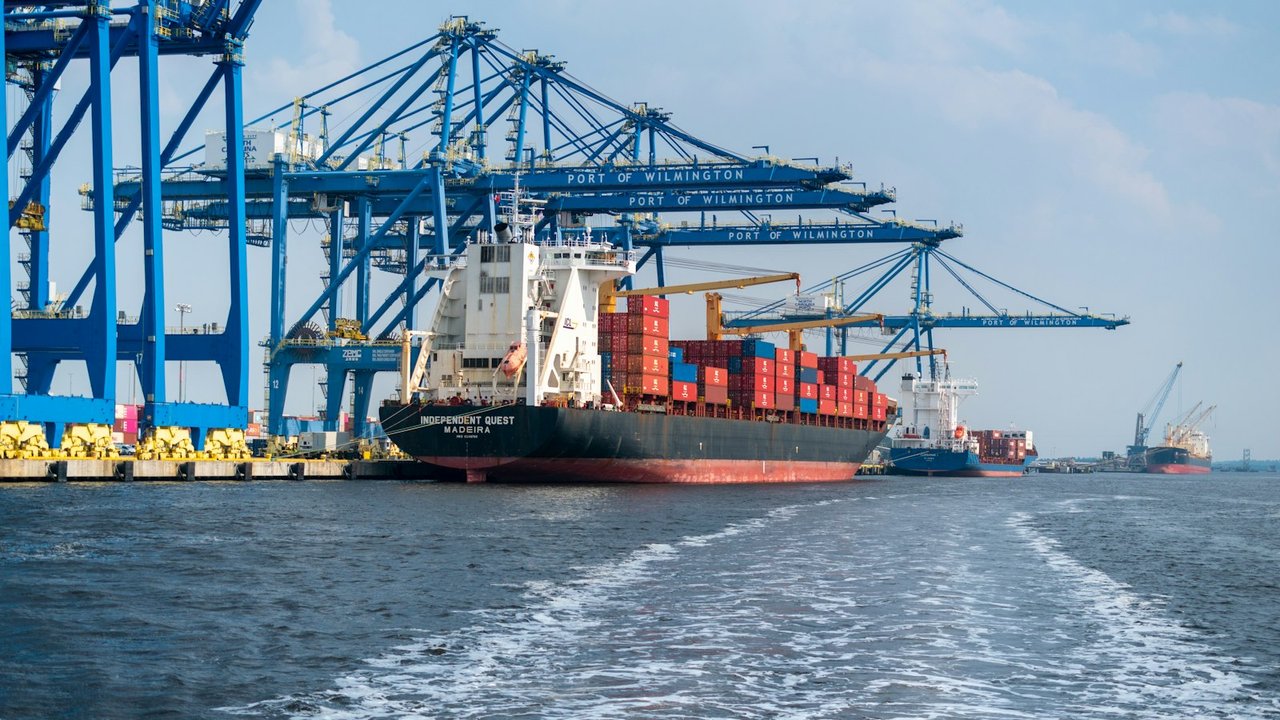
Photo by Elijah Mears on Unsplash
Parcels from Europe to US customers no longer enter the US duty-free, whatever their value. The US has suspended its USD 800 de minimis exemption for all countries, including for postal shipments, and a US law ends the exemption for good on 1 July 2027. For postal parcels, a new electronic entry becomes mandatory for certain goods on 20 January 2027. If you sell to the US, check your duty rates, your checkout text and your carrier's Christmas dates before you ship.
Key takeaways
The US de minimis exemption for goods worth USD 800 or less is suspended for all countries, including postal parcels.
A US law ends the de minimis exemption on 1 July 2027, so duty-free low-value parcels are not coming back.
Duty depends on each product's US tariff code and origin. Check the current rate before you price US orders.
CBP moved the mandatory date for its new postal Entry Type 13 from 22 October 2026 to 20 January 2027.
Give every order line a clear description, value, country of origin and HS code, or parcels can be delayed.
What has changed for parcels to the US?
Under the de minimis exemption, the US used to let in goods worth USD 800 or less without duty. Executive Order 14388 of 20 February 2026 continued its suspension "for all countries", including shipments sent through the international postal network.
U.S. Customs and Border Protection (CBP) then wrote the suspension into its regulations. Its interim final rule of 24 June 2026 suspends the exemption "indefinitely" for mail shipments worth USD 800 or less and sets up a new postal informal entry process for goods worth up to USD 2,500. A separate rule covers all other ways of shipping, such as express carriers.
A law then makes the change permanent. The rule notes that the One Big Beautiful Bill Act, enacted on 4 July 2025, "terminated the de minimis exemption effective July 1, 2027". From that date, duty-free entry for low-value parcels is gone by statute, not only suspended.
CBP's e-commerce FAQ, updated 6 November 2026, sums up the result: the suspension applies to goods worth USD 800 or less "arriving via all modes", and all applicable duties, taxes and fees must be paid.
What changes on 20 January 2027?
Entry Type 13 is CBP's new electronic informal entry for international mail. It was due to become mandatory on 22 October 2026. On 14 October 2026, CBP extended that date by 90 days to 20 January 2027.
According to CBP:
- Entry Type 13 applies to postal shipments of goods subject to Section 201, 232 or 301 duties, or under the rules of another US government agency.
- International mail entry procedures do not change before 20 January 2027.
- Filers can use Entry Type 13 voluntarily until then.
On 8 October 2026, CBP also proposed extending the requirements to all international mail packages except letters and flats. That is a proposal, not a rule yet.
If you ship with a postal service, ask it how it handles US parcels after 20 January 2027. If you use DHL Express, UPS, FedEx or another express carrier, ask how it clears US parcels and how it bills the duty.
How much duty will your US customers pay?
There is no single rate. CBP says duty rates are based on the product's classification in the US Harmonized Tariff Schedule and the rates in effect when the goods are entered. The rate also depends on the country of origin, and some products carry extra duties.
Sources disagree on how the current US tariffs apply to goods from the EU, and they changed several times in 2026. French customs, for example, notes that a 10% US surcharge under Section 122 expired on 24 July 2026. Do not rely on a single percentage from a blog post. Look up the rate for your own products instead:
- The US Harmonized Tariff Schedule gives the rate for each tariff code.
- The European Commission's Access2Markets tool shows US import duties for goods exported from the EU.
- Your carrier or customs broker can confirm the rate and fees for a specific shipment.
None of this is legal or tax advice, so check the rate for your own products with a customs broker, your carrier or a tax adviser.
What does this mean for Christmas orders?
Every US order can now come with duty and clearance charges, and a customer who does not expect them may refuse the parcel. Customs checks also take time, so US parcels need to leave earlier than European ones.
Some carriers have already published early dates for destinations outside Europe. Posten's last date for letters and small parcels to the USA and Canada is 7 December 2026. DHL Paket's last pickup for parcels from Germany to countries outside Europe is also 7 December 2026, and Posti's last date for parcels from Finland to countries outside Europe is 3 December 2026. Check your own carrier's date and set your US order deadline before it.
What should you check before you ship to the US?
- Look up the duty rate for your best sellers. Use the product's tariff code and country of origin, not a general percentage.
- Decide who pays the duty. Either you pay it and include it in your price (delivered duty paid, DDP), or the customer pays on delivery (delivered at place, DAP). Ask your carrier which options it offers.
- Say it clearly at checkout. Tell US customers whether duties and fees are included, on the product page and in the cart.
- Price US delivery separately. Include the duty you pay and your carrier's clearance fees if you ship DDP.
- Complete the customs data on every line. A plain description, the value, the currency, the country of origin and the HS code.
- Ask your carrier three questions. Which entry process it uses, who pays the duty and fees, and how it bills them.
- Set an earlier Christmas deadline for US orders and show it on your site.
- Watch two dates. Postal Entry Type 13 becomes mandatory on 20 January 2027, and the de minimis exemption ends by law on 1 July 2027.
How Zippendo helps
Zippendo keeps the customs data for US parcels with each shipment and books it with your own carrier agreements.
- You enter the description, unit price, currency, country of origin and HS code once per order line, and your EORI number once for your organization or per brand.
- DHL Express, UPS and FedEx produce the customs documents the destination requires and return them with the label. See customs and documents.
- Zippendo produces commercial invoices, proforma invoices and packing slips, and they can print automatically with the label.
- Delivery terms default to DAP, so check that they match what you promise US customers.
- Shipping rules give the US its own delivery price, separate from your European prices.
For a one-off parcel, the free commercial invoice generator and CN22/CN23 generator work without an account. Our guide to international shipping from Shopify and WooCommerce covers the rest of the setup. Create a Zippendo account, connect your DHL Express, UPS or FedEx account and give the US its own shipping rule.
Shipping to the US FAQ
Sources
- U.S. Customs and Border Protection: Indefinite suspension of the de minimis exemption for mail shipments and new postal informal entry process, 24 June 2026
- U.S. Customs and Border Protection: International mail Entry Type 13 mandatory implementation date extended to Jan. 20, 2027, 14 October 2026
- U.S. Customs and Border Protection: E-commerce frequently asked questions, updated 6 November 2026
- French customs: Trade relations between the EU and the United States, updated 12 November 2026
- Posten Norge: Sendefrister, accessed 16 November 2026
- Posti: Joulun tärkeät päivämäärät, accessed 16 November 2026
- DHL Paket: Weihnachten 2026 for business customers, accessed 16 November 2026
Sincerely yours,

Jonas Bang
Jonas Bang · Co-founder, CPO