

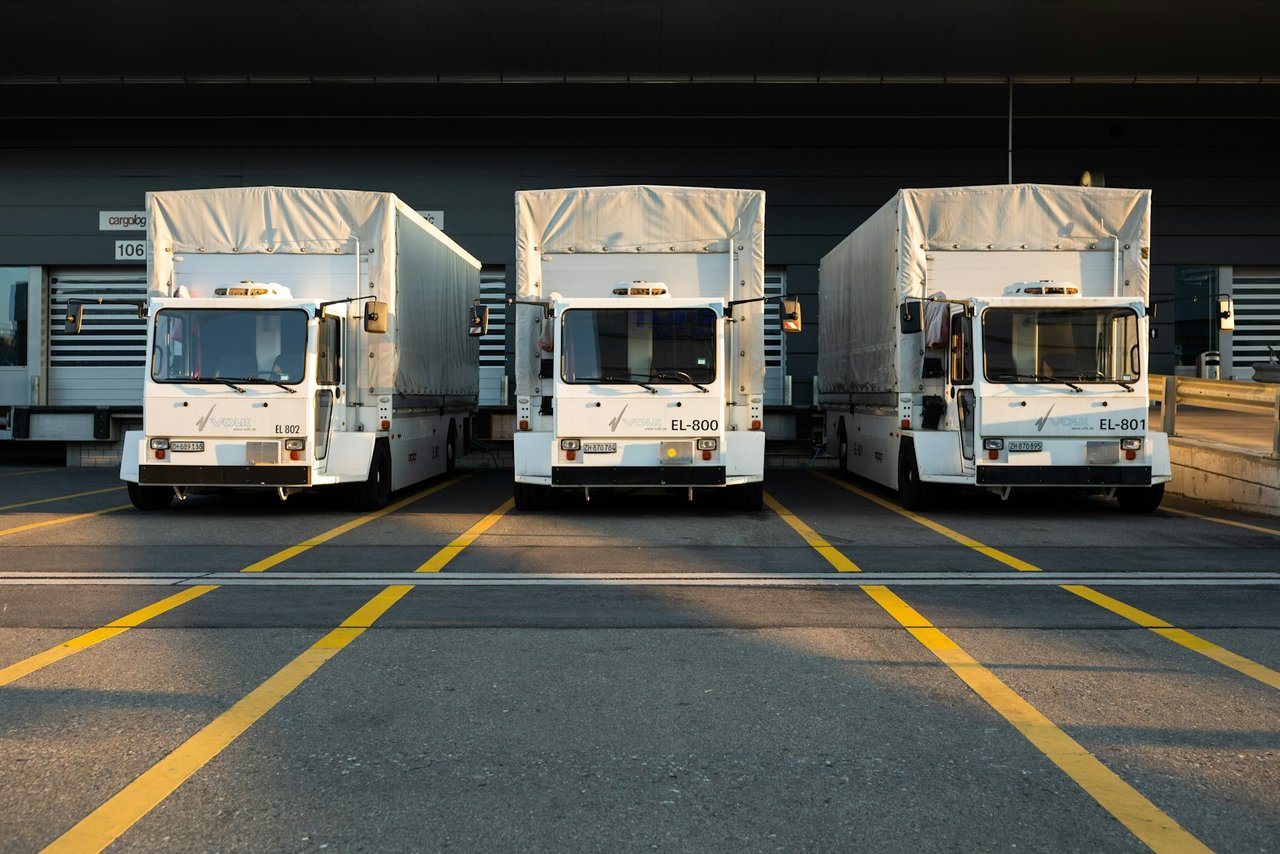
Photo by Pascal Meier on Unsplash
Choose a shipping carrier by where your customers live and how they want to receive parcels, then check it against your parcel sizes, your returns and any border you cross. Price decides only between carriers that already pass those tests. Most webshops end up with two or three carriers, not one. Test a new carrier on one country or one weight band first, while your current carrier keeps the rest of your orders.
Key takeaways
Start with your customers' countries and how they want parcels, then check size, returns and borders.
Service points, parcel lockers and home delivery are different products, and few carriers lead in all three.
A common setup is a domestic carrier, a second delivery type and an express carrier for parcels outside the EU.
Before you sign, ask about surcharges, returns, pickups and minimum volumes, not only the base rate.
Test a new carrier on one country or one weight band while your current carrier keeps the other orders.
Which questions decide the carrier?
Eight questions narrow the choice. They cover your customers' countries and delivery choices, your parcel sizes, returns, borders, pickups, cash on delivery and contracts. Answer them for the orders you ship today, not the ones you hope to ship next year.
Where are your customers?
Look at last quarter's orders by country. If most go to one country, the carrier with the densest network there matters most. If a third go abroad, a carrier that is strong at home but weak across borders will cost you on every foreign order.
How do they want to receive parcels?
Service points (a counter in a shop), parcel lockers and home delivery are separate products, often from separate carriers. Check what your customers pick when you offer a choice, and what other shops in your country offer at checkout. The guide to parcel lockers and service points in Europe compares the networks by country.
What do you ship?
Weigh and measure your five most common packed parcels and your largest one. Lockers have fixed compartment sizes, service points have weight limits, and furniture or pallets need a freight product.
How many parcels come back?
A shop with many returns should look closely at the return products: drop-off at a service point or locker, collection from the customer's home, and returns without a printed label.
Do you ship outside the EU?
Parcels to Norway, Switzerland, the United Kingdom or the United States need customs data. Some carriers make the customs papers as part of the booking, and some don't ship outside the EU at all.
Do you drop parcels off, or does the carrier collect?
At 20 parcels a day, a drive to the drop-off point works. At 300, you need a daily collection, and on peak days an extra pickup you can book.
Do your customers pay on delivery?
Cash on delivery is still expected in some markets. Only some carriers offer it, and often only on some products.
Do you need a contract?
To print labels from shipping software on your own rates, you need an agreement and a customer number with each carrier. Some carriers ask for a minimum volume first.
A decision table for choosing a carrier
Read across from your situation. The carriers named are examples you can connect in Zippendo, not a ranking. Check each one's own terms for your countries before you decide.
| Your situation | What to look for | Carriers to compare |
|---|---|---|
| Most customers in your own country collect at a shop | Service points close to where your customers live | PostNord or Bring in Sweden, Posti or Matkahuolto in Finland, GLS Denmark or DAO in Denmark, PostNL in the Netherlands |
| Customers prefer parcel lockers | Lockers close to where your customers live | Instabox, Budbee, InPost, Bring Parcel Locker |
| Customers want delivery to the door | Home delivery with text or email notices, and returns collected from the home | Budbee, Porterbuddy, PostNord Home |
| Large, heavy or palletised goods | Weight limits that fit, and freight products | DSV Road, Danske Fragtmænd in Denmark, Bring Cargo in Norway |
| Customers across Europe, shipped from one EU warehouse | Cross-border products from your country, with service points abroad | DHL eCommerce Europe, GLS, Bring |
| Customers outside the EU, or urgent parcels | Worldwide reach, with customs papers made in the booking | DHL Express, UPS, FedEx |
| Shoppers who pay on delivery | Cash on delivery on the products you use | InPost, DPD Polska, GLS Poland, DHL Express, DHL eCommerce Europe |
| More parcels than you can drop off | Pickups you can book when you need them | Bring, DHL Express, DPD Polska, PostNord in Denmark, Sweden and Finland, InPost in Poland |
| Many returns | Easy drop-off, label-free returns or collection from home | Budbee, Instabox, PostNord, GLS Denmark |
Some rows overlap on purpose. A shop in Poland that sells to lockers and takes cash on delivery may find that InPost answers two rows at once. A shop in Denmark that ships furniture may need a parcel carrier and a freight carrier side by side. The full list of carriers is on the integrations page, and cash on delivery in Europe goes deeper on that one row.
Why do most webshops use two or three carriers?
No carrier is strongest at every delivery type in every country. A typical setup has three parts:
- A main domestic carrier for service points, which carries most of your volume.
- A second delivery type, such as lockers or home delivery, often from another carrier.
- An express carrier such as DHL Express, UPS or FedEx for parcels outside the EU and urgent orders.
A second carrier also gives you room to move. If one carrier changes its prices or its service in a country, you move that country's orders to the other carrier instead of renegotiating under time pressure.
Stop at the number you need. Each carrier adds an agreement to manage, an invoice to check every period and a handover routine at the packing bench. Add one only when it covers something the others don't.
What should you ask before you sign a carrier agreement?
Beyond the base rate per parcel, ask about surcharges, returns, pickups, minimum volumes, liability for lost parcels and label formats. These answers decide what you actually pay and how much work the carrier makes for your team.
- Which products, countries and services are in the agreement, from your sender address?
- Which surcharges apply (fuel, oversize, remote areas, peak season) and how are they calculated?
- What does a return cost, and do returns use their own customer number?
- Is a daily collection included, and what does an extra pickup cost?
- Is there a minimum volume, and what happens if you ship less?
- How much does the carrier pay for a lost or damaged parcel, and how do you claim?
- Which label formats does the carrier send, and does it fit your label printer?
- Is there a test system, so you can print test labels before the first real parcel?
Write the answers down next to each other. Two carriers with the same base rate can differ a lot once returns and surcharges are added.
How do you test a new carrier without switching everything?
Never move all your orders on one day. Run the new carrier next to the old one on a small, clearly defined slice, and widen it only when the numbers say so.
- Connect the new carrier next to your current one. Most carrier connections have a test mode: print a few test labels and check the size, the barcode and the sender address before any real parcel ships.
- Pick one slice: one destination country, one weight band, or one new delivery type such as lockers next to your service point option.
- Give that slice its own shipping rule. Customers in that slice see the new option at checkout. If you move a whole country, take that country off the old rule, or both options will show and customers will pick.
- Run it through at least two invoice periods. One period is too short to see surcharges and returned parcels.
- Measure what matters. Count bookings that failed, parcels that came back uncollected, customer questions about delivery and damaged parcels, and compare the invoice with what you expected.
- Widen or stop. Add countries or weights to the new rule, or delete it. Your old carrier kept shipping the rest the whole time.
How Zippendo helps
Zippendo connects each carrier on your own agreement, so the labels and the rates are yours. Read more about why your own carrier agreements matter.
- Under Carriers, connect the carrier you want to test next to the ones you use today. You can connect the same carrier more than once, for example one PostNord connection per country agreement.
- Shipping rules set the carrier, product and services for an order. At Shopify and WooCommerce checkout, each rule that matches the cart's destination country, weight and order value is a delivery option with your own price, and the rule's Test button shows whether a sample cart would match.
- The integrations page lists every carrier you can connect, each with its own page. If a carrier you need is missing, send a request from Carrier requests in the app.
Create a Zippendo account and connect the carrier you want to test next to the one you use now.
Choosing a carrier FAQ
Sincerely yours,

Jonas Bang
Jonas Bang · Co-founder, CPO